
Caring for Elderly Parents: How Siblings Can Share the Responsibility | Baton Rouge Elder Care
Aug 18, 2026 | Moore Care

Caring for elderly parents is a responsibility many families eventually face. While helping Mom or Dad can be incredibly meaningful, elder care can also become physically, emotionally, and logistically demanding, especially when one sibling begins carrying most of the responsibility.
Between work, children, appointments, household responsibilities, and everyday life, it isn’t always realistic for one person to handle everything an aging parent needs.
For families throughout the Greater Baton Rouge Area, creating a shared caregiving plan can help siblings work together, reduce stress, and ensure an elderly parent receives consistent, compassionate care. And when family members can’t provide everything themselves, professional at home care can become an important part of the team.
Why Caring for Elderly Parents Often Falls on One Sibling
Even in large families, elder care responsibilities frequently aren’t divided evenly.
The sibling who lives closest may naturally become the person who takes Mom to doctor’s appointments, picks up groceries, manages medications, checks on the house, and responds when something unexpected happens.
Other siblings may live outside Baton Rouge, or outside Louisiana entirely. Some may have demanding careers, young children, financial limitations, or other responsibilities.
Over time, the sibling providing most of the hands-on care may begin to feel overwhelmed or resentful, while siblings farther away may not fully realize how much work is happening behind the scenes.
The goal shouldn’t necessarily be to divide every responsibility equally. Instead, families should work toward dividing responsibilities fairly and realistically.
1. Start With an Honest Family Conversation
Good elder care begins with communication.
Instead of waiting until a health crisis forces everyone to make decisions quickly, siblings should talk about their parent’s current needs and what those needs may look like in the future.
Whenever possible, include your parent in the conversation. Aging does not mean losing the right to make decisions. Understanding what Mom or Dad wants can help siblings work toward the same goals.
Discuss questions such as:
- Does our parent feel safe living at home?
- Are meals being prepared regularly?
- Are medications being taken correctly?
- Is someone available to provide transportation?
- Is the house being maintained?
- Does our parent need help bathing, dressing, grooming, or moving around the home?
- Is loneliness or isolation becoming a concern?
- Who is currently handling appointments, finances, errands, and emergencies?
- Would additional in-home care make everyday life easier or safer?
The National Institute on Aging recommends identifying care needs, determining who will serve as the primary caregiver when appropriate, and deciding how each person can contribute.
2. Divide Responsibilities Based on Strengths, not Just Geography
The sibling who lives closest to your elderly parent shouldn’t automatically have to do everything.
Instead, consider each person’s location, schedule, skills, and resources.
For example, one sibling might handle doctor’s appointments and communicate with healthcare providers. Another could manage bills, insurance paperwork, or other financial responsibilities. A sibling who lives farther away might research elder care resources, schedule services, order groceries, manage a shared calendar, or call Mom or Dad regularly.
Someone else might visit on weekends so the primary family caregiver can have time away.
There are many ways to contribute to a parent’s care without providing daily hands-on assistance.
Consider designating one family member as the primary point of contact for your parent’s in-home care provider, doctors, and other professionals. Having one person coordinate communication can help prevent conflicting information, missed updates, or confusion that can happen when multiple family members are communicating separately.
Creating clearly defined responsibilities also eliminates the frustrating question of, “I thought you were taking care of that.”
3. Remember That Long-Distance Siblings Can Still Help
Not every sibling caring for an elderly parent in the Greater Baton Rouge Area will live nearby.
Fortunately, distance doesn’t prevent someone from being an active member of the caregiving team.
Long-distance siblings can:
- Schedule appointments
- Research local resources
- Manage insurance paperwork
- Pay bills or help organize finances
- Arrange grocery or meal deliveries
- Coordinate home maintenance
- Maintain a family calendar
- Call their parent regularly
- Communicate with the sibling providing daily care
- Help financially with professional care when appropriate
Most importantly, long-distance siblings should regularly ask the local caregiver a simple question:
“What would be most helpful to you right now?”
The answer may be something completely different from what they expect.
4. Keep Important Information in One Place
When several people are involved in elder care, communication can quickly become complicated.
Consider creating a shared digital folder, document, or family caregiving notebook containing important information such as:
- Physician contact information
- Current medications
- Upcoming appointments
- Emergency contacts
- Insurance information
- Caregiver schedules
- Important household information
- Legal or financial documents, when appropriate
- Contact information for in-home care providers
A shared family calendar can also make appointments, caregiver visits, family visits, and other responsibilities visible to everyone.
Keeping information organized can be particularly valuable when an unexpected hospitalization or other emergency occurs.
5. Schedule Regular Family Check-Ins
An elderly parent’s needs can change gradually—or almost overnight.
A caregiving arrangement that worked six months ago may no longer provide enough support today.
Schedule regular conversations between siblings to discuss what’s working and what needs to change.
These conversations don’t need to be lengthy. Even a short monthly phone or video call can help everyone stay informed.
Ask:
Has Mom or Dad’s mobility changed? Are they eating regularly? Have there been any falls or close calls? Is the primary caregiver becoming exhausted? Does our parent need more companionship? Would additional at home care help?
Regular communication allows families to adjust the care plan before smaller concerns become larger problems.
6. Don’t Let Old Sibling Dynamics Take Over
Caregiving has a way of bringing old family dynamics back to the surface.
One sibling may feel like they’ve “always been the responsible one.” Another may feel criticized regardless of how much they contribute. Disagreements about money, medical decisions, living arrangements, or who is doing enough can quickly become emotional.
Try to keep conversations focused on one central question:
What does our parent need right now?
When disagreements happen, focus on the current situation instead of reopening decades-old sibling conflicts.
If necessary, involving an objective professional such as a care manager, counselor, social worker, or other trusted third party may help the family develop a workable plan.
7. Recognize When Family Caregiving Isn’t Enough
There may come a point when even a well-organized family needs additional help.
That’s where professional in-home care can make an enormous difference.
Families sometimes view hiring a caregiver as replacing what family members should be doing. A healthier way to look at it is that professional caregivers become another part of the care team.
At home care can provide consistent support while allowing sons and daughters to spend more time simply being family.
Professional caregivers may help with needs such as:
- Companionship
- Meal preparation
- Personal care
- Light housekeeping
- Transportation and errands
- Mobility assistance
- Routine and supervision
- Respite for family caregivers
Professional support can also help fill gaps when siblings have different schedules or live outside South Louisiana.
How Moore Care Can Support Your Family
At Moore Care, we understand that caring for an elderly parent is rarely a one-person responsibility.
Our caregivers work alongside families throughout the Greater Baton Rouge Area to provide dependable, compassionate in-home care based on each client’s individual needs.
Maybe Mom is doing well at home but needs companionship and a little assistance during the week. Perhaps Dad needs more consistent help with everyday activities. Or maybe a family caregiver simply needs regular time to rest, work, spend time with their own family, or take care of themselves.
Whatever your family’s situation looks like, professional elder care can help create a more sustainable plan.
The goal isn’t to take family out of caregiving.
It’s to give families the support they need to keep caring.
Every family’s arrangement will look different.
What matters most is creating a plan that protects your parent’s comfort, dignity, safety, and independence while also recognizing the limits of each family caregiver.
If your family is navigating elder care in the Greater Baton Rouge Area, Moore Care is here to help you explore options for compassionate, dependable in-home care.
Contact Moore Care today to learn how we can help your family create a care plan that works for everyone.
Category: At Home Care, Elder Care, Home Care, Planning Ahead
Tags: Elder Care, Elderly Care, senior care
Recent Posts

Private Caregiver vs. Home Care Agency: What Louisiana Families Should Know
When an aging parent or loved one begins needing help at home, many families face the same question: Should we hire a caregiver privately, or should we use a licensed home care agency? At first glance, hiring someone directly can seem like the simpler and more affordable option. Maybe a friend recommends someone they trust.…

How Do I Know If My Parent Needs In-Home Care? 7 Signs to Watch For
If you’ve been asking yourself this question, you’re not alone — and the fact that you’re paying close attention is already a sign of how much you love them. In most cases, there’s no single moment that makes it obvious. It’s a collection of small changes: a missed pill here, a stack of unopened mail…
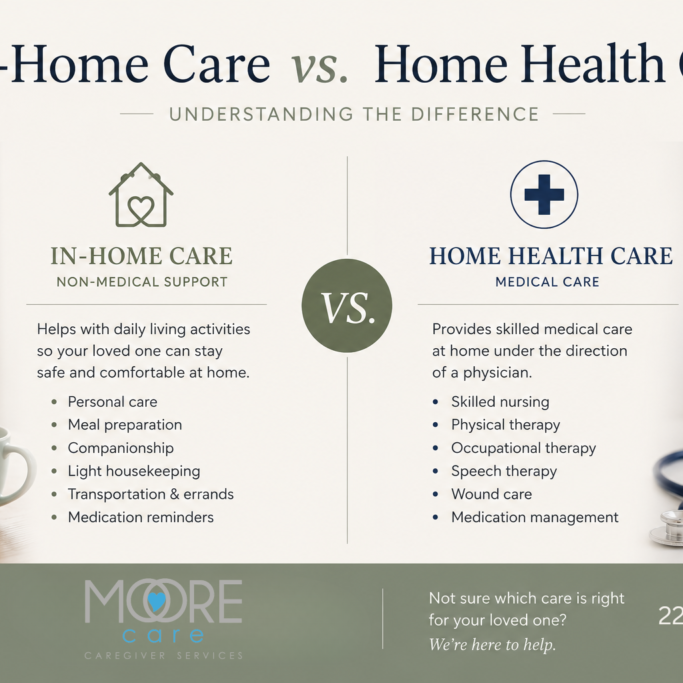
In Home Care vs. Home Health Care
When a loved one begins to need extra support, one of the first questions families ask is, “Do we need home care or home health care?” While these terms are often used interchangeably, they provide very different services. Understanding the difference can help you make the best decision for your loved one’s health, safety, and…