
How Do I Know If My Parent Needs In-Home Care? 7 Signs to Watch For
Aug 7, 2026 | Moore Care

If you’ve been asking yourself this question, you’re not alone — and the fact that you’re paying close attention is already a sign of how much you love them. In most cases, there’s no single moment that makes it obvious. It’s a collection of small changes: a missed pill here, a stack of unopened mail there, a phone call that felt a little “off.” Taken together, these moments often point to the same conclusion that your parent could use some extra support at home.
Below are seven of the most common signs that it may be time to consider in-home care, along with what each one can look like in everyday life.
1. Noticeable Changes in Hygiene or Grooming
A parent who’s always kept up their appearance may start wearing the same clothes for several days, skip showers, or let their hair go unwashed. This isn’t a matter of motivation, it’s often a sign that bathing, dressing, or grooming have become physically harder to manage alone.
What to watch for: Unwashed hair, body odor, wrinkled or stained clothing, reluctance to bathe.
2. A Home That’s Not as Tidy as It Used to Be
Look around during your next visit. Piles of mail, dishes left in the sink, or laundry that’s stacked up aren’t signs of laziness, they’re often signs that everyday household tasks have simply become too much to keep up with.
What to watch for: Clutter that wasn’t there before, expired food in the fridge, burned pots, unpaid bills.
3. Missed Medications or Mismanaged Prescriptions
Keeping track of multiple prescriptions gets harder with age, and a missed dose can have serious consequences. If you notice pill bottles that are full when they shouldn’t be, or empty too soon, it’s worth a closer look.
What to watch for: Unfilled prescriptions, confusion about dosages, expired medications still in the cabinet.
4. Unexplained Bruises, Falls, or Frequent “Close Calls”
According to the CDC, falls are the leading cause of injury among adults 65 and older, and more than one in four older adults falls each year. If your parent has new bruises they can’t quite explain, or mentions a stumble “that was no big deal,” it’s a signal worth taking seriously, not a coincidence to brush aside.
What to watch for: Bruising on arms or legs, furniture moved to use as support, hesitation on stairs.
5. Changes in Weight, Appetite, or Meal Preparation
Cooking takes planning, mobility, and energy — all of which can become harder to manage over time. A parent who’s lost weight, skips meals, or has a fridge full of expired or convenience food may be struggling more than they let on.
What to watch for: Noticeable weight loss, empty or oddly stocked pantry, skipped meals.
6. Withdrawal from Friends, Family, or Activities They Used to Love
Loneliness and isolation are more common, and more serious, than many families realize. If a parent who once looked forward to church, cards with friends, or weekly calls has started to pull back, it may not be about losing interest. It could be about losing the ability, energy, or confidence to keep going.
What to watch for: Declining invitations, less phone contact, giving up hobbies without explanation.
7. Increasing Forgetfulness That Disrupts Daily Life
Everyone forgets a name or misplaces their keys occasionally. But according to the Alzheimer’s Association, memory loss that disrupts daily life — like forgetting recently learned information, missing important dates, or repeatedly asking the same questions — is not a typical part of aging and deserves attention.
What to watch for: Repeating questions, missed appointments, difficulty following familiar routines.
What to Do If You’re Seeing These Signs
Noticing one or two of these signs doesn’t necessarily mean a major life change is needed right away but it’s a good reason to start the conversation. The National Institute on Aging recommends approaching your parent gently and without judgment, focusing on specific concerns rather than generalizations.
From there, many Baton Rouge families find it helpful to talk with a local in-home care provider who can offer an assessment and help sort out what kind of support actually makes sense — whether that’s a few hours of help each week or full-time care.
If you’re noticing any of these signs in a parent or loved one here in Baton Rouge, we’d be glad to talk it through with you. Contact Moore Care for a free, no-pressure conversation about what support could look like for your family, or learn more about our Personal Care Services and 24-Hour Care options.
Category: At Home Care, Elder Care, Home Care, Planning Ahead
Recent Posts

Private Caregiver vs. Home Care Agency: What Louisiana Families Should Know
When an aging parent or loved one begins needing help at home, many families face the same question: Should we hire a caregiver privately, or should we use a licensed home care agency? At first glance, hiring someone directly can seem like the simpler and more affordable option. Maybe a friend recommends someone they trust.…

Caring for Elderly Parents: How Siblings Can Share the Responsibility | Baton Rouge Elder Care
Caring for elderly parents is a responsibility many families eventually face. While helping Mom or Dad can be incredibly meaningful, elder care can also become physically, emotionally, and logistically demanding, especially when one sibling begins carrying most of the responsibility. Between work, children, appointments, household responsibilities, and everyday life, it isn’t always realistic for one…
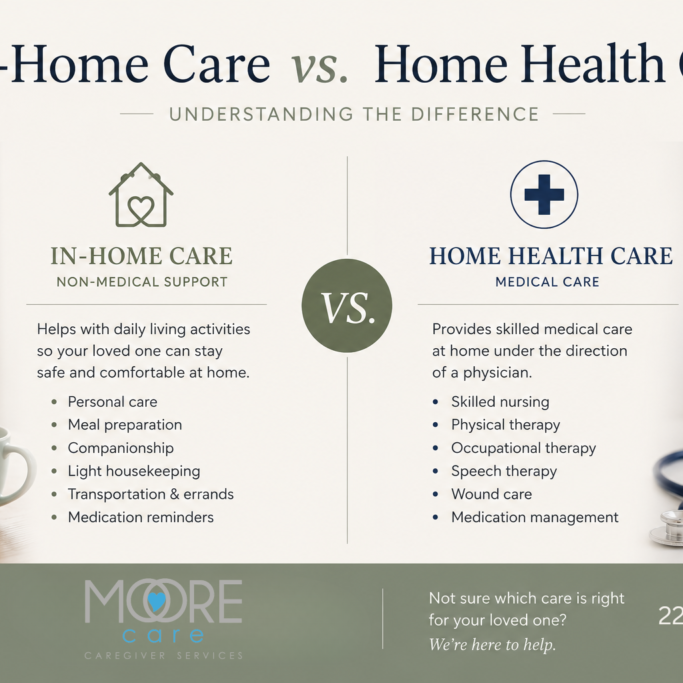
In Home Care vs. Home Health Care
When a loved one begins to need extra support, one of the first questions families ask is, “Do we need home care or home health care?” While these terms are often used interchangeably, they provide very different services. Understanding the difference can help you make the best decision for your loved one’s health, safety, and…